
Step back in time to the glorious 90s, a decade bursting with bold flavors and culinary experiments that still make taste buds tingle. Remember when fruit snacks were a food group and the concept of “fusion cuisine” meant slapping a taco on a pizza? Those were the days when everything from neon-colored drinks to bizarre snack inventions ruled the snack aisle, and every school lunch felt like a mini food festival.
Fast forward to today, and it’s clear that 90s food trends are making a comeback, proving that nostalgia can be delicious. This article dives into the quirky, sometimes questionable, but always memorable food trends that defined a generation. Get ready to relive the magic of Dunkaroos, bagel bites, and the infamous Jell-O salad—because who wouldn’t want to indulge in a little culinary time travel?
Overview of 90s Food Trends
The 1990s showcased diverse and unique food trends that captivated many. One prominent feature was the rise of convenience foods, appealing to busy lifestyles. Snack foods became colorful and playful, with items like Fruit Roll-Ups and Dunkaroos leading the charge. These vibrant snacks frequently filled lunchboxes and delighted children across the nation.
Fusion cuisine emerged in this decade, blending flavors from various cultures to create innovative dishes. Sushi rolls with cream cheese and teriyaki chicken tacos epitomized this culinary experimentation. The blending of culinary traditions introduced a fresh approach to dining, with restaurants making bold flavor combinations.
Healthy eating also gained momentum in the 90s, marked by a focus on organic ingredients. Food brands launched products labeled as low-fat and low-carb, reshaping grocery store layouts. The trend emphasized health-conscious choices while still delivering taste in products like whole-grain cereals and yogurt.
Fast-food chains capitalized on the decade’s playful spirit by introducing new menu items. Fast-food trends included the beloved personal-sized Bagel Bites and the beloved McDonald’s McFlurry. These offerings catered to consumers wanting convenience without sacrificing flavor.
Gourmet coffee culture emerged, with specialty beverages transforming daily routines. Espresso became widely available, with coffee shops serving frothy cappuccinos and flavored lattes. The rise of coffee culture influenced social gatherings and established coffee as a staple drink.
Iconic dishes like Jell-O salad and dessert pizzas reflected the 90s playful dining experience. Celebrations frequently featured these items, highlighting the vibrant food scene of the era. Those culinary trends offered a mix of fun and innovation, which resonate with nostalgic food enthusiasts today.
Popular Snacks from the 90s
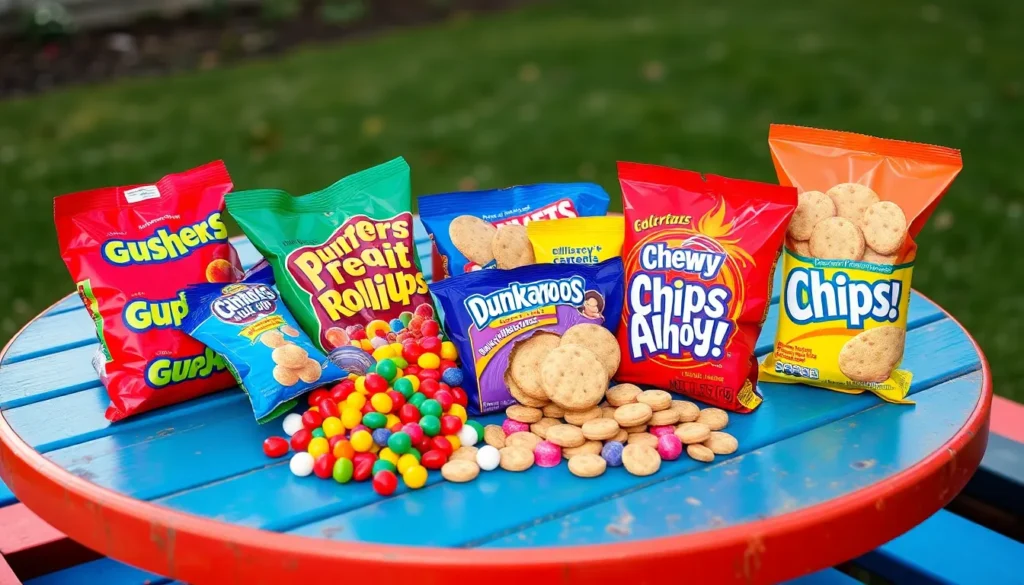
The 1990s brought a wave of fun and colorful snacks that defined childhood for many. These treats combined convenience and creativity, making them unforgettable parts of the decade.
Gushers and Fruit Roll-Ups
Gushers captivated kids with their fruity flavors and liquid centers, offering a burst of sweetness in every bite. Packed in vibrant packaging, these snacks became a lunchtime favorite. Fruit Roll-Ups also gained popularity for their flexible shape and various flavors, allowing kids to enjoy a chewy fruit experience. Both options invited playful creativity, with kids using them to craft edible art at lunchtime. The combination of bright colors and unique textures made these snacks appealing and memorable.
Dunkaroos and Other Iconic Snacks
Dunkaroos emerged as a popular treat, featuring fun cookies paired with creamy frosting for dipping. This snack delighted both kids and adults, becoming a staple in school lunchboxes. Other iconic snacks from the decade included Chewy Chips Ahoy!, offering chewy cookie goodness, and the ever-popular Pizza Bagels, combining two beloved foods into one. The variety of snacks showcased the playful spirit of the 90s, making them cherished memories for many. Each treat contributed to the vibrant food landscape of the time, reflecting the nostalgic vibes of the era.
Fast Food Innovations
The 1990s marked a transformative time for fast food, driven by new trends that catered to consumer demands.
Rise of the Value Menu
Fast food chains introduced value menus as a response to changing economic conditions, enabling customers to enjoy affordable options. McDonald’s launched its Dollar Menu in 1993, offering items priced at one dollar, making meals accessible to a broader audience. Taco Bell followed suit with its own value offerings, enticing customers with low-cost tacos and burritos. Competitive pricing drew in families seeking budget-friendly dining experiences, while teenagers and young adults found great appeal in snack-sized options that fit their lifestyles. This shift toward value focused on convenience and savings, solidifying fast food’s role in everyday dining.
The Era of Super Size
Super sizing gained popularity during the 90s, allowing consumers to increase portion sizes at minimal additional cost. McDonald’s famously introduced the Super Size option for fries and drinks, encouraging diners to indulge. Consumers enjoyed the idea of larger servings, associating bigger portions with better value. Fast food advertisements often highlighted these generous sizes, attracting those who sought a filling meal. This trend contributed to discussions around health and nutrition as concerns about portion control began to surface. As social dynamics shifted, so did perspectives on eating habits, marking a significant chapter in fast food history.
Healthy Eating Movement
The 1990s witnessed a pivotal shift in dietary preferences, with consumers becoming increasingly health-conscious. Grocery stores began stocking a variety of low-fat and fat-free options that appealed to those seeking healthier lifestyles. Low-fat yogurt and fat-free salad dressings gained popularity, steering people towards perceived healthier alternatives. Marketers capitalized on this trend, promoting products as guilt-free indulgences. This movement not only altered grocery aisles but also influenced restaurant menus, encouraging lighter fare in dining establishments and paving the way for future health trends.
Introduction of Low-Fat and Fat-Free Options
Low-fat and fat-free options emerged prominently in the food landscape of the 90s. Brands advertised products featuring reduced fat content, attracting consumers wishing to decrease calorie intake. Snack foods such as baked chips and low-fat cheese took center stage in kitchens across the country. This trend extended to desserts, with alternatives like frozen yogurt overtaking traditional ice cream. As customers gravitated toward these choices, it accelerated a cultural shift towards viewing healthy eating as both attainable and desirable.
The Impact of Organic Foods
Organic foods became increasingly mainstream during this vibrant decade. The demand for chemical-free produce surged as individuals sought cleaner eating habits. Farmers’ markets gained traction, providing access to fresh, locally-sourced options, which fostered community connections. The certification of organic products lifted the profile of organic goods, adding legitimacy to the movement. As awareness grew, supermarkets began dedicating entire sections to organic produce, making it an integral part of the shopping experience. This change marked a step toward prioritizing health and wellness in the public consciousness.
Beverage Trends
Beverage trends in the 1990s reflected both convenience and experimentation. The decade marked a significant rise in bottled water consumption as health consciousness increased. Brands like Aquafina and Dasani entered the market, providing consumers with portable hydration options that reshaped drinking habits. Many adults began to prioritize health over sugary drinks, leading to bottled water’s widespread acceptance.
Soda flavors and brands also made their mark during the decade. Popular sodas included the classic Coca-Cola and Pepsi, as well as experimental flavors like Vanilla Coke and Pepsi Blue. Fruit-flavored sodas gained popularity, appealing to younger consumers with new options. Fanta’s vibrant colors and unique flavors captured attention, while Mountain Dew’s intense citrus profile resonated with adventurous drinkers. These diverse choices contributed to the soda wars, fueling brand loyalty and igniting playful marketing campaigns that defined the era.
Cultural Influences on 90s Food
The 1990s showcased distinct cultural influences shaping food trends. Television played a significant role in shaping food choices, with popular shows featuring characters enjoying iconic snacks. Programs like “Friends” showcased New York’s coffee culture, fueling demand for specialty beverages. “The Simpsons” humorously highlighted fast food, reinforcing its place in American life. These representations made certain foods feel trendy and relatable, encouraging viewers to indulge in those same culinary experiences.
Fast food became intertwined with pop culture, making brands household names. McDonald’s, Taco Bell, and other chains launched memorable ad campaigns that appealed to youth. Super-size options resonated with consumers craving value, creating an association between fast food and convenience. The inclusion of fast food in films and music videos helped solidify its popularity, turning burgers and fries into symbols of social gatherings and carefree fun. These cultural influences contributed to an evolution in eating habits throughout the decade.
The food trends of the 90s left an indelible mark on culinary culture that continues to resonate today. From whimsical snacks that defined childhood to the rise of convenience foods that catered to busy lifestyles, this decade was a playground for creativity and flavor. The playful spirit of 90s cuisine not only shaped dining habits but also laid the groundwork for today’s food innovations.
As nostalgia drives the resurgence of these iconic treats, it’s clear that the flavors of the past still hold a special place in the hearts of many. Whether it’s savoring a Dunkaroo or enjoying a bagel bite, the essence of 90s food trends lives on, reminding everyone of the joy that comes with sharing memorable meals.

